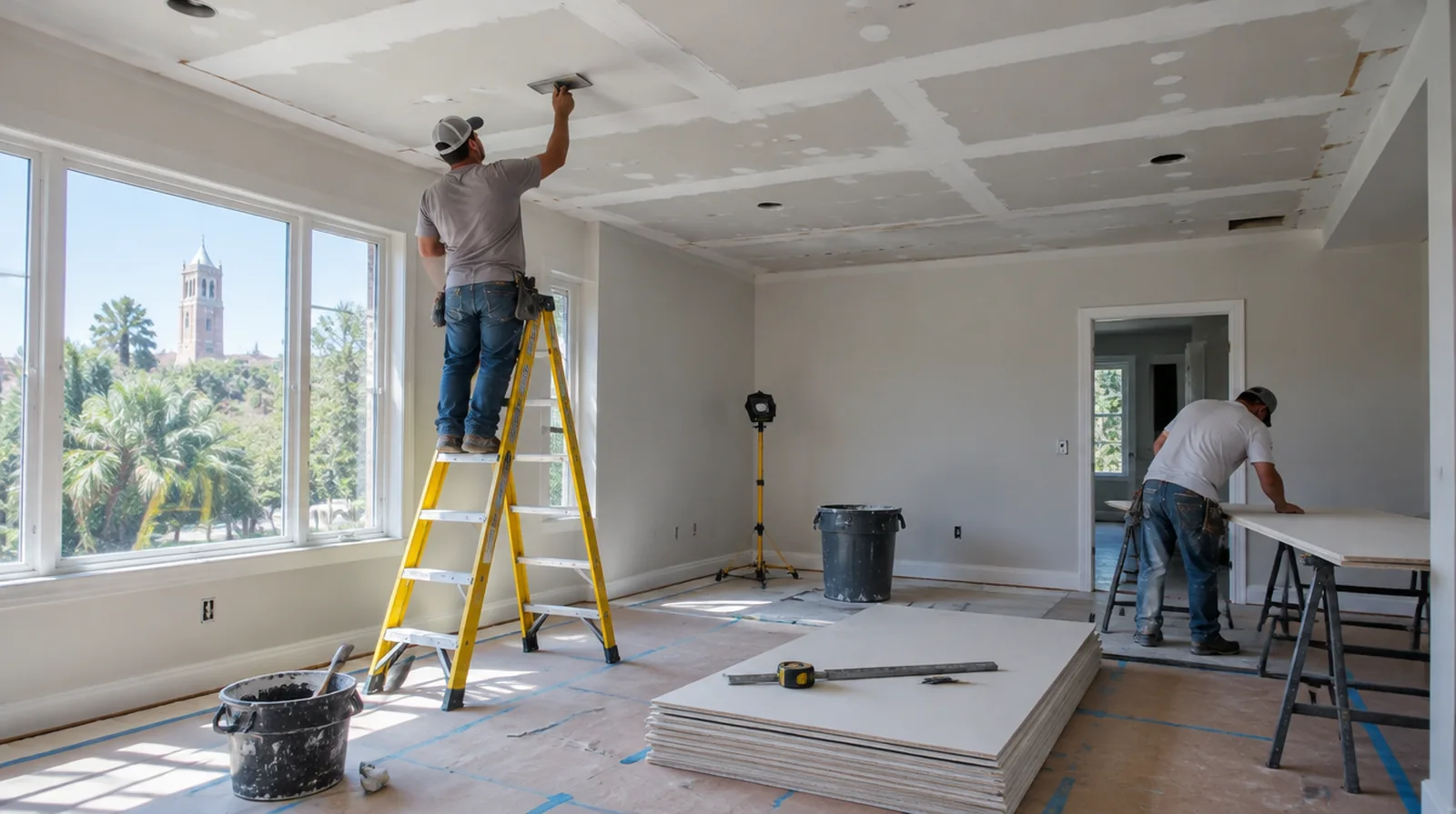
Add reliable backing
Support a ceiling replacement mechanically at its perimeter rather than using finishing compound as a structural attachment. Fit compatible board thickness so the old and new faces meet without an unneeded step. Where a neat final edge matters, agree whether the finish ends against existing trim or whether that trim will be removed and replaced.
Evaluate sagging sections
A drooping panel requires an assessment of fastening, support and material condition instead of a surface skim alone. Keep people away from an unstable area while the appropriate professional evaluates it. When reviewing the finished work, use the agreed lighting and natural room viewpoints so the assessment reflects the intended use of the space.
Set the repainting scope
A small fresh white patch can stand out against an older ceiling even when the surface is level. Painting to a natural boundary may be preferable to touching up only the repair. For an initial assessment from pictures, provide an overall room photograph and a detailed view of the defect so both context and scale are apparent.
Identify the existing surface
Check whether the overhead finish is gypsum board, plaster or a mixture of older layers. The right repair depends on that actual construction rather than the color of its painted face. At the handover inspection, review the finish from ordinary room positions using the lighting conditions that were agreed for the work.
Cut back to sound material
Water softened gypsum and loose edges do not provide a dependable base for a new patch. The removal boundary should reach stable material and allow the replacement to be properly supported. If the completion date matters most, allow for intervals between coats as well as active labor instead of assuming the entire process happens continuously.
Separate fixtures from board work
Handling lights, sprinkler fittings and air grilles could call for appropriate trades and building coordination. Assign removal and reinstatement responsibilities for any fitting that blocks safe repair access. When the project space includes a doorway, check the clearance for panel movement as well as the amount of space available for finishing tools.
Address isolated stains
A dry repaired ceiling may still need a compatible stain blocking primer before decorative paint. Verify that the source is no longer active instead of treating primer as a remedy for damp material. If occupancy must resume on a certain day, include the later primer and paint stages in the timetable as well as drywall installation and finishing.
Check the source of damage
A ceiling stain or soft area may be caused by plumbing or another moisture source above the interior. Resolve the source of moisture before relying on a decorative ceiling repair to remain sound. If the surface condition is uncertain, allow for an assessment that can distinguish stable material from layers that should never be covered.
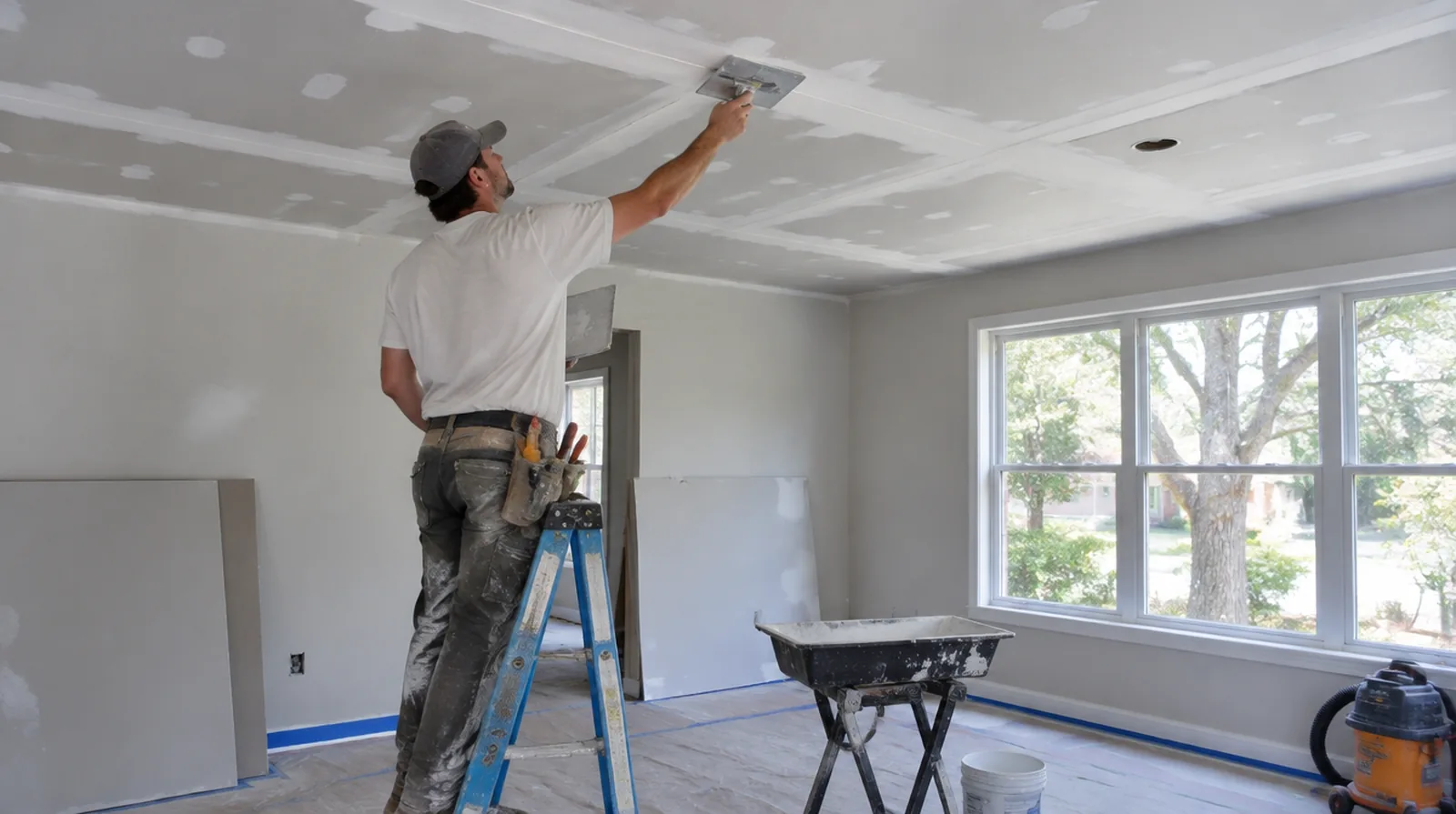
Review the room after drying
Inspect from the doorway and from positions near the windows once the finishing layers have dried. Identify outstanding paint preparation while protection and access are still available. If a household member is sensitive to dust, discuss containment and cleaning expectations before choosing how to stage the interior work.
Treat the joints overhead
Tape and compound reinforce the patch boundary while successive coats build a broad shallow blend. Overhead seams can be conspicuous because windows often send light almost parallel to the ceiling. When concealed damage is possible, establish how additional findings and any proposed removal will be recorded before the scope changes.
Project context in Gainesville
The painting plan can then be based on a stable repaired surface rather than another temporary cover. If a frequently used room must stay partly available, define a sensible separation and move fragile belongings before setup.
Scope questions before finishing
If the room will remain occupied, identify a practical separation between the protected room and the space that still needs daily access.
At a surface receiving strong window light, review a dried trial from the side in addition to the normal straight view of the wall.
If the problem developed after another renovation, explain which nearby materials or building systems changed before the damage became visible.
In a room with little free floor space, identify temporary storage for belongings and establish enough clearance for the work before delivery.
Where the quoted work stops before painting, request a well defined description of what remains so the next decorating stage can be priced realistically.
For work spread across differing planes, record their dimensions separately and describe the boundary of the treatment on each surface.
When damage followed other building work, describe the nearby alterations and the sequence between those changes and the first noticeable defect.
When panel replacement exposes a cavity, resolve any required inspection before that opening is closed and the surface finishing begins.
When a quote includes multiple visits, ask what happens during each stage and when the space needs to remain undisturbed between coats.
If access passes through a shared space, arrange protection and a delivery route that do not unnecessarily obstruct other occupants.
Where the wall meets fixed furniture, clarify whether removal is included or whether the finish will terminate at the accessible edge.
If the finish paint is already chosen, share its sheen and color early because those choices influence how substrate preparation is judged.
Explore the Gainesville drywall overview for related options, or read the project planning information before arranging the next stage.
More planning details for Gainesville
A Gainesville room improvement can be easier to stage when airflow, protection and household use are discussed together. Finishing material needs suitable drying conditions, but that does not mean opening the room indiscriminately during humid weather. Ask the finisher how the actual work environment will be managed between coats.