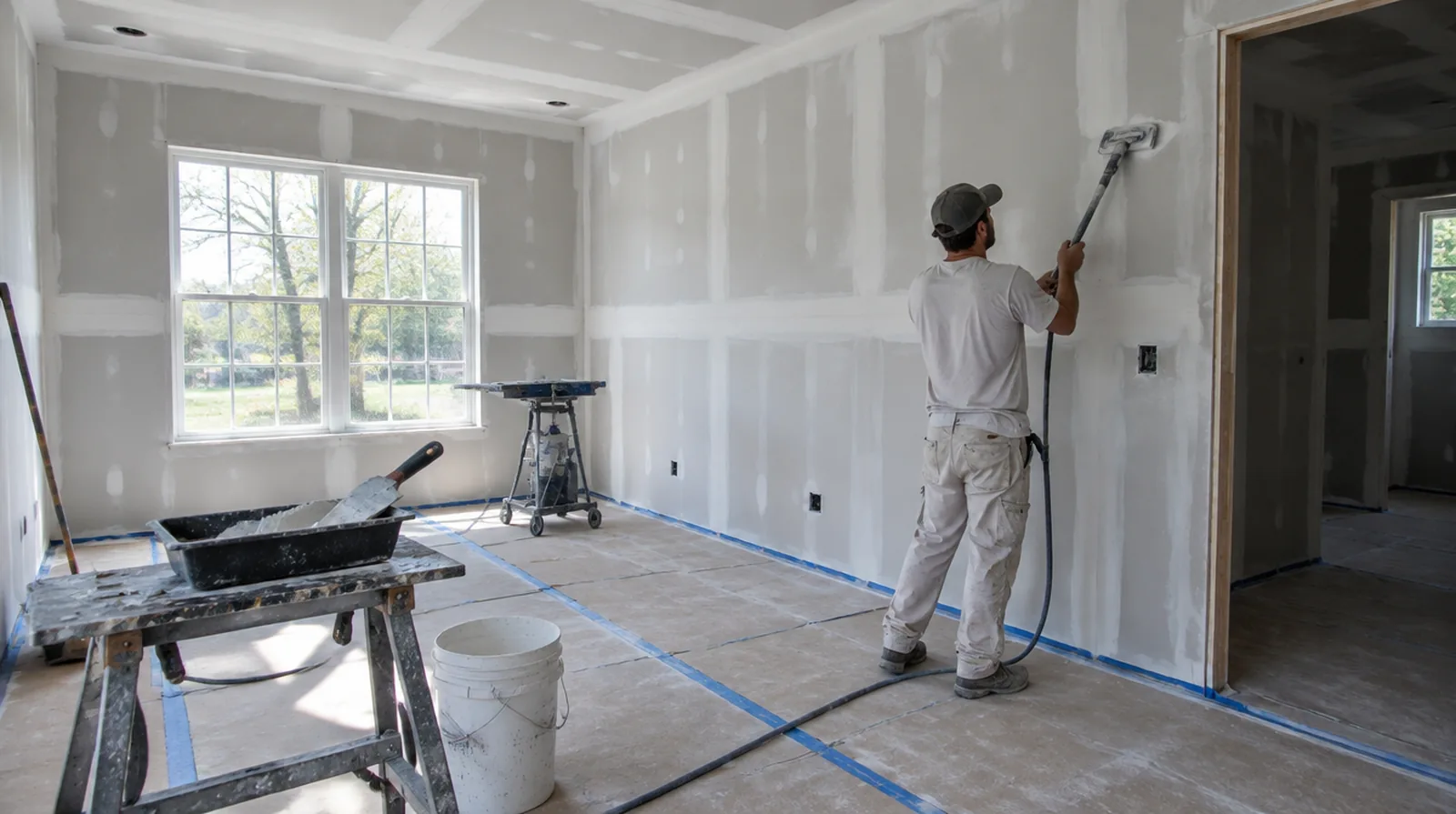
Choose joint materials
Joint bedding and the last surface coats do not necessarily call for identical products. Choose compatible compounds with regard to their intended purpose, the interior and the relevant product instructions. If the surface condition is uncertain, allow for an assessment that can distinguish stable material from layers that should not be covered.
Allow genuine drying time
A firm outer skin does not always mean the material beneath it is ready for sanding. Temperature, air movement and room humidity affect the interval between stages of finishing. At a repair beside an opening, allow clearance for moving board through the doorway and space to use the finishing tools effectively.
Inspect the whole wall
Checking only the joint lines misses transitions near corners, ceiling edges and electrical boxes. Use the intended room lighting where practical and include an oblique view across the plane. Where several contractors share the renovation, identify the inspection and handover milestones that determine when each following stage can proceed.
Assess the hung board
Finishing cannot fully correct unsupported edges or panels that sit on distinct planes. Check how the sheets sit and how the fixings hold them instead of beginning with compound immediately. Where existing floors will remain, specify protective measures and review the path used by panels, equipment and finishing tools.
Coordinate with the painter
A primer coat sometimes makes small surface defects easier to identify than raw white compound. Establish responsibility for those final adjustments and any review after priming before the work starts. Where a future fixture will be installed, coordinate any required backing while the cavity is accessible instead of reopening the completed wall.
Embed the tape
A continuous bedding layer supports the tape and reduces the chance of air bubbles along the seam. Inside corners need a crisp fold and balanced coverage on both faces. At an edge beside built in furniture, state whether the obstruction will be removed or whether finishing stops at the section that can be reached.
Agree on the visual standard
Agree how the completed wall will be viewed and decorated before choosing the finishing standard. A written finish level gives the installer and painter a clearer shared target. If the completion date matters most, allow for intervals between coats as well as active labor instead of assuming the entire process happens continuously.
Consider a skim layer
Broad grazing light could reveal a difference in texture between the paper face and finished joints. A suitable skim treatment could help create a more uniform surface when the specification calls for it. Where several contractors share the renovation, identify the inspection and handover milestones that determine when each following stage can proceed.
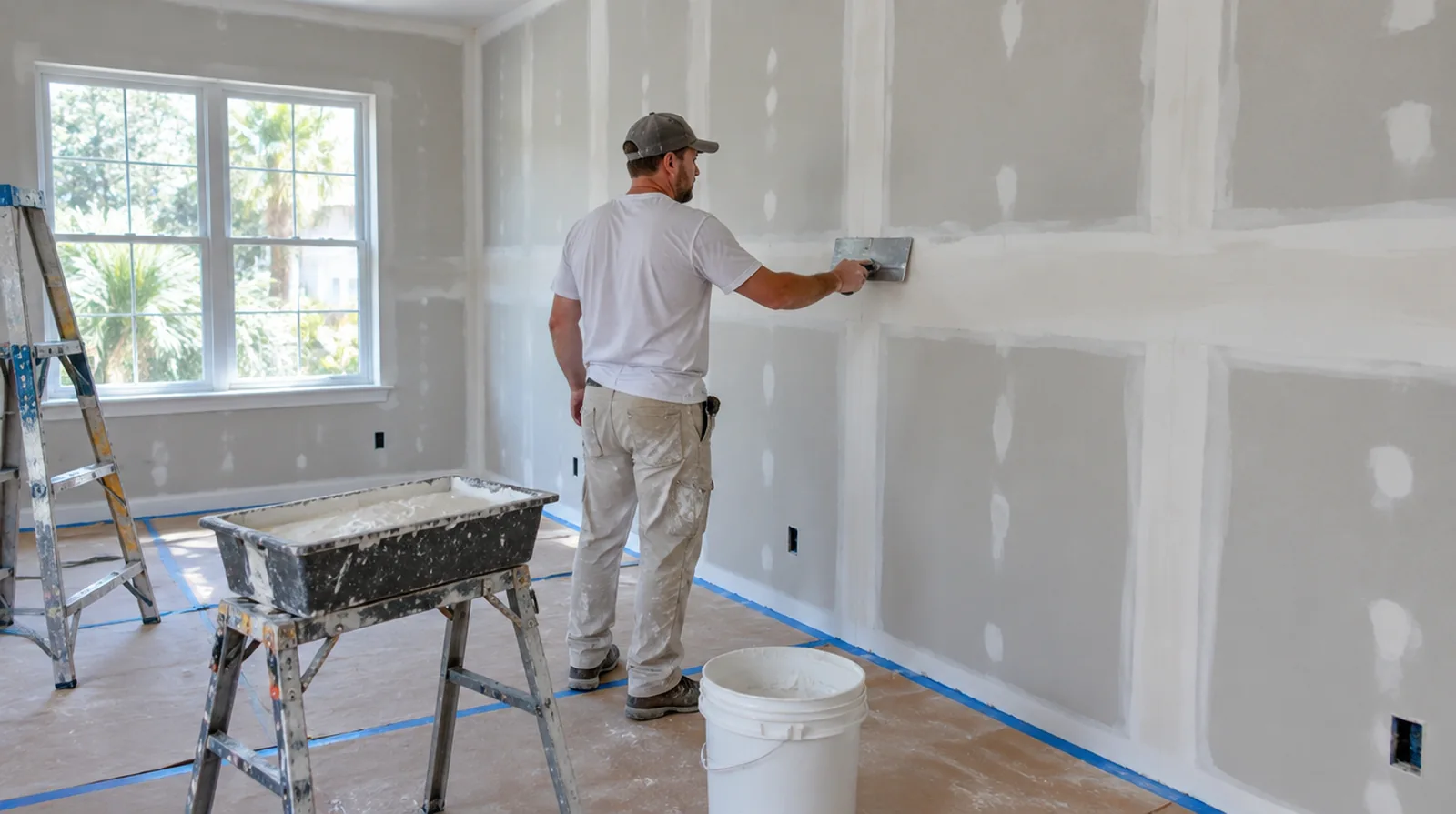
Keep external corners straight
A corner profile only produces a straight visible line when it is fitted and coated correctly. Resolve distortion or damage to the bead before successive coats make correction more difficult. For a project involving a building manager, confirm access hours and protection requirements before promising a start date or a short completion window.
Use controlled sanding
Use sanding to refine minor imperfections instead of reshape an unnecessarily heavy joint. Dust extraction and protection matter even for a room with only a few seams. If occupancy must resume on a certain day, include the later primer and paint stages in the timetable as well as drywall installation and finishing.
Project context in Gainesville
A Gainesville room improvement can be easier to stage when airflow, protection and household use are discussed together. Finishing material needs suitable drying conditions, but that does not mean opening the room indiscriminately during humid weather.
Scope questions before finishing
For a wall receiving a decorative covering, provide its preparation requirements early adequate for the drywall finish to support that product.
Where existing floors will remain, specify protective measures and review the path used by panels, equipment and finishing tools.
For a planned new wall mounted fixture, resolve its backing requirements while the cavity remains open instead of cutting into completed drywall later.
If the coating stability is unclear, assess which layers are adequately bonded and which should be removed instead of simply hidden beneath new material.
If a distinct painter completes decoration, agree the condition of the handed over surface and assign responsibility for small final corrections.
When photographs are used for an initial discussion, include a wide room view as well as a close view so scale and surrounding finishes are understandable.
If the ceiling or wall includes fittings, identify the person responsible for removing and reinstalling each item before the work begins.
When comparing competing estimates, make sure their protection, surface finish and disposal allowances describe equivalent work before comparing the final prices.
When a wall has repeated defects, keep a record of earlier repair attempts so a new assessment does not simply repeat an unsuccessful approach.
For a tightly furnished room, plan temporary storage and the minimum working clearance before material is carried into the property.
For a surface that will receive wall covering, share the product requirements early so the finishing stage supports the planned decorative treatment.
Where flooring is staying in place, agree on protective coverings and check that tools and material handling will not damage the noticeable finish.
Explore the Gainesville drywall overview for related options, or read the project planning information before arranging the next stage.
More planning details for Gainesville
Ask the finisher how the actual work environment will be managed between coats. If a frequently used room must stay partly available, define a sensible separation and move fragile belongings before setup. Wall mounted items and adjoining trim should be included in the assessment so the final edge is not left ambiguous.