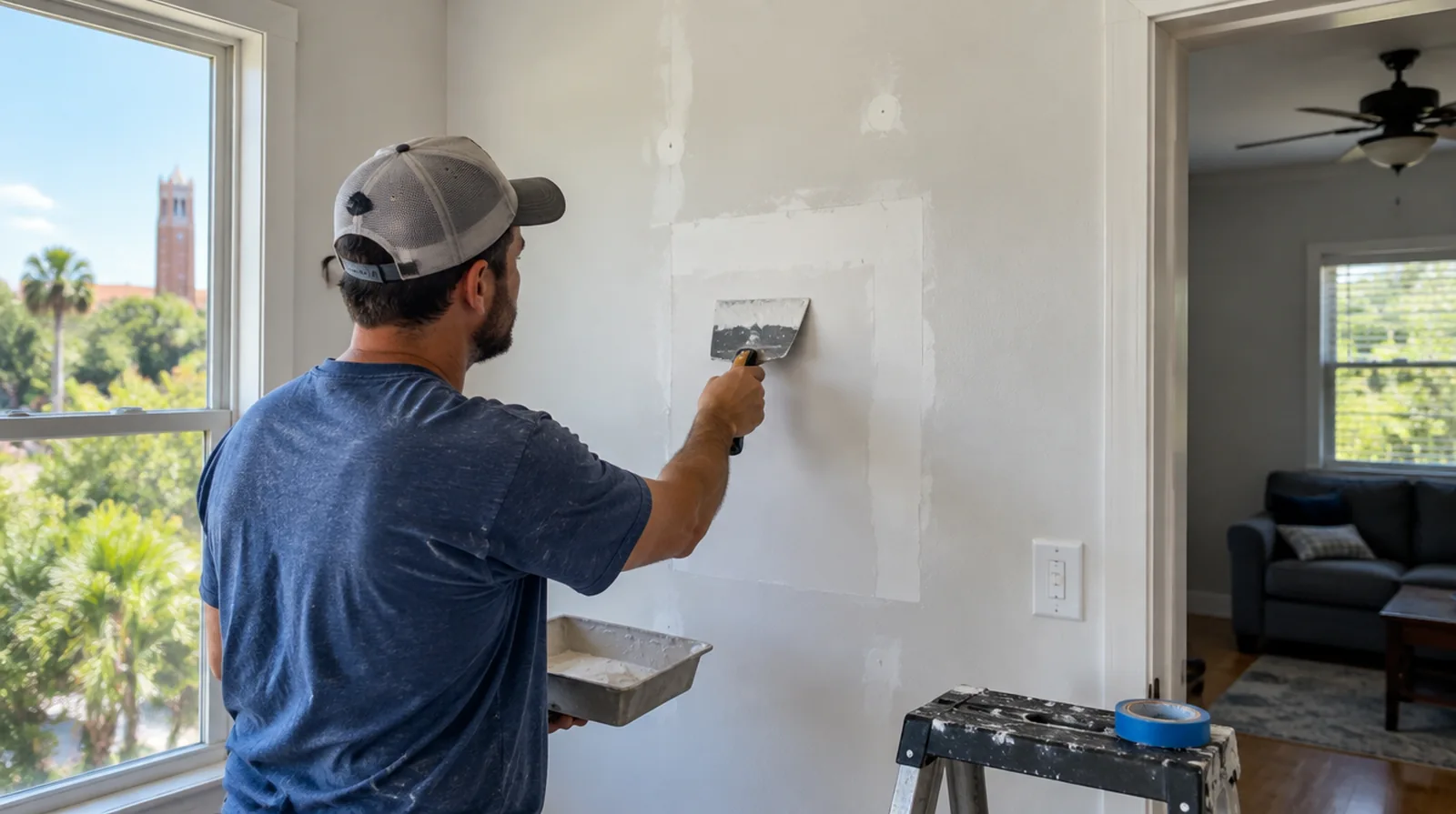
Build thin finishing coats
Several controlled applications are typically easier to flatten than one deep deposit of finishing compound. Judge the previous layer only after it has dried sufficient for the next operation. When a quote includes multiple visits, ask what happens during each stage and when the space needs to remain undisturbed between coats.
Support the replacement
A substantial hole is normally rebuilt with board and proper support, not filled entirely with finishing material. Use a replacement that aligns with the original panel face before attempting to blend the joints. If a separate painter completes decoration, agree the condition of the handed over surface and assign responsibility for small final corrections.
Feather beyond the opening
The visible finishing area normally extends farther than the hole because a gradual taper hides the repair edge. The gradual transition is especially important where a window lights the surface from the side. When a wall has repeated defects, keep a record of earlier repair attempts so a new assessment does not simply repeat an unsuccessful approach.
Handle small fastener marks
A bump over a fastener may reflect separation or movement at the panel support. Correct the fastening condition as needed before covering the mark with a new finishing coat. If the space will remain occupied, identify a workable separation between the work area and the space that still needs daily access.
Identify the cause
Damage from an impact is not assessed in the same way as a seam that keeps splitting at a door opening. Check whether the wall surface feels firm and whether the defect has changed since it first appeared. If access passes through a shared space, arrange protection and a delivery route that do not unnecessarily obstruct other occupants.
Document recurring movement
Cracks that return after cosmetic repairs deserve a conversation about movement or moisture instead of another quick cover. A drywall estimate should state when another trade needs to investigate before surface work proceeds. While a removed panel exposes the wall surface cavity, complete the necessary review of concealed work before replacement board closes the opening.
Review with side lighting
A patch that looks flat from the doorway may still show a small hollow under a nearby window. Checking from more than one angle helps separate surface imperfections from differences in paint sheen. For work spread across differing planes, record their dimensions separately and describe the boundary of the treatment on each surface.
Set the paint boundary
An old paint coating may not accept an inconspicuous local touch up even after a flat repair. Consider a corner to corner decorative boundary when color or sheen differences would otherwise remain noticeable. For a room with restricted airflow, plan drying conditions alongside dust protection and the comfort of people occupying neighboring spaces.
Protect adjacent surfaces
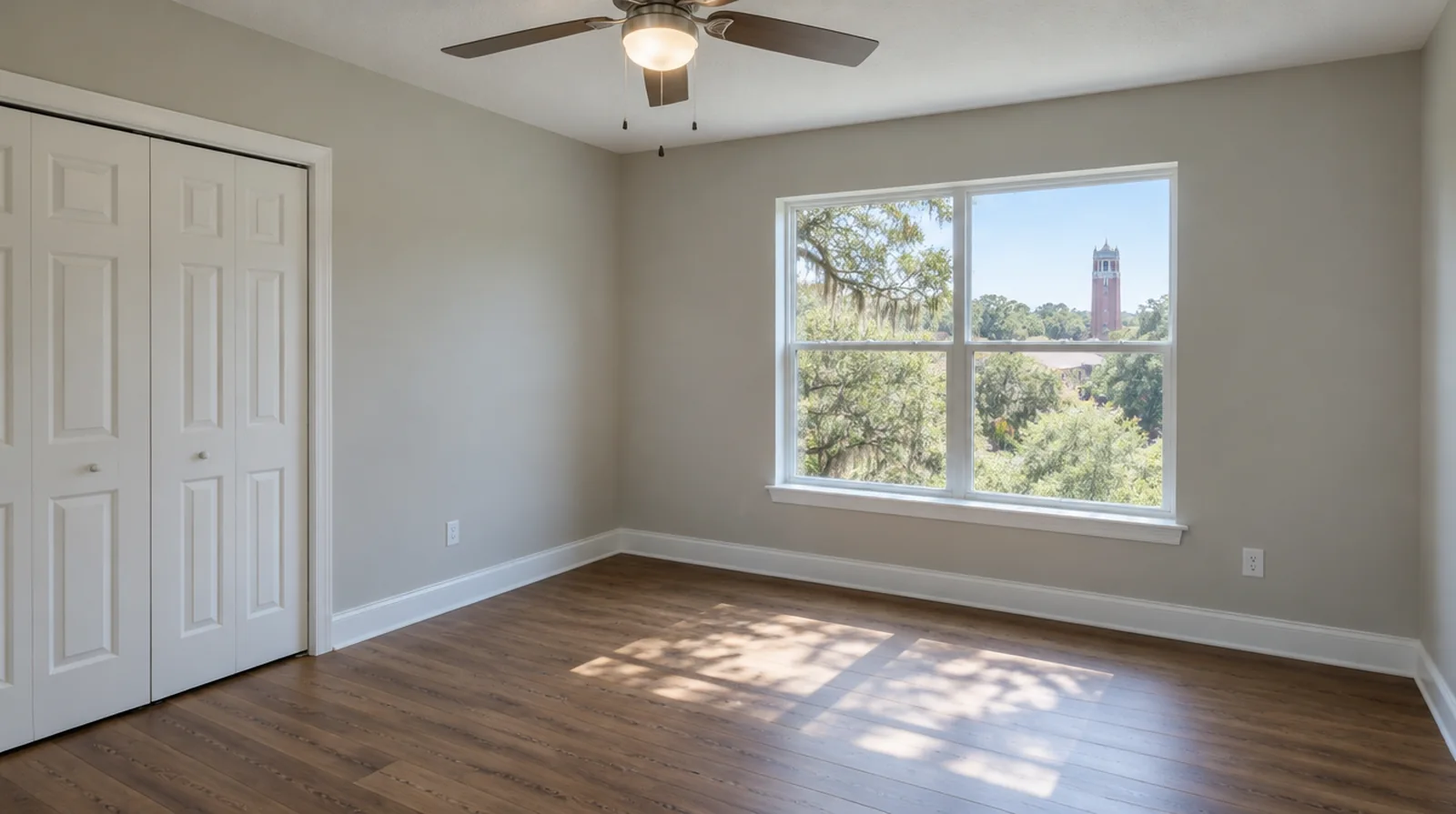
Fine gypsum dust can travel beyond the immediate patch unless floors and nearby furnishings are protected. The work plan should identify what needs moving and which room can remain in use. Where a finished perimeter is prominent, decide whether trim stays in position or is removed before agreeing how the new surface meets that edge.
Prepare for primer
Fresh compound and existing painted drywall absorb coatings differently unless the repair receives suitable primer. Establish whether suitable primer is part of the repair or will be applied by another contractor. When more damage could be hidden, ask how any added scope will be documented before extra material is removed or replaced.
Project context in Gainesville
Ask the finisher how the actual work environment will be managed between coats. If a frequently used room must stay partly available, define a sensible separation and move fragile belongings before setup.
Scope questions before finishing
When damage followed other building work, describe the nearby alterations and the sequence between those changes and the first noticeable defect.
At a surface receiving strong window light, review a dried trial from the side in addition to the normal straight view of the wall surface.
When the same defect has returned, share information about previous repair methods so the next assessment can consider why they did not last.
If the proposal requires return visits, identify the purpose of each stage and the intervals during which finishing material needs to remain undisturbed.
For a planned new wall mounted fixture, resolve its backing requirements while the cavity remains open instead of cutting into completed drywall later.
For a repair that crosses several surfaces, measure the affected planes separately so the estimate can explain where each finishing treatment starts and stops.
If access passes through a shared space, arrange protection and a delivery route that do not unnecessarily obstruct other occupants.
When the wall has strong reflected light, look at the full plane rather than judging only the narrow strip immediately beside the patch.
When a quote includes multiple visits, ask what happens during each stage and when the interior needs to remain undisturbed between coats.
When panel replacement exposes a cavity, resolve any required inspection before that opening is closed and the surface finishing begins.
For a surface carrying numerous paint layers, discuss whether differences in the retained profile or sheen justify decorating a broader area.
If the project is part of a larger remodel, settle the sequence with flooring, trim and cabinet work before setting a final finishing date.
Explore the Gainesville drywall overview for related options, or read the project planning information before arranging the next stage.
More planning details for Gainesville
A Gainesville room improvement can be easier to stage when airflow, protection and household use are discussed together. Finishing material needs suitable drying conditions, but that does not mean opening the room indiscriminately during humid weather. Wall mounted items and adjoining trim should be included in the assessment so the final edge is not left ambiguous.