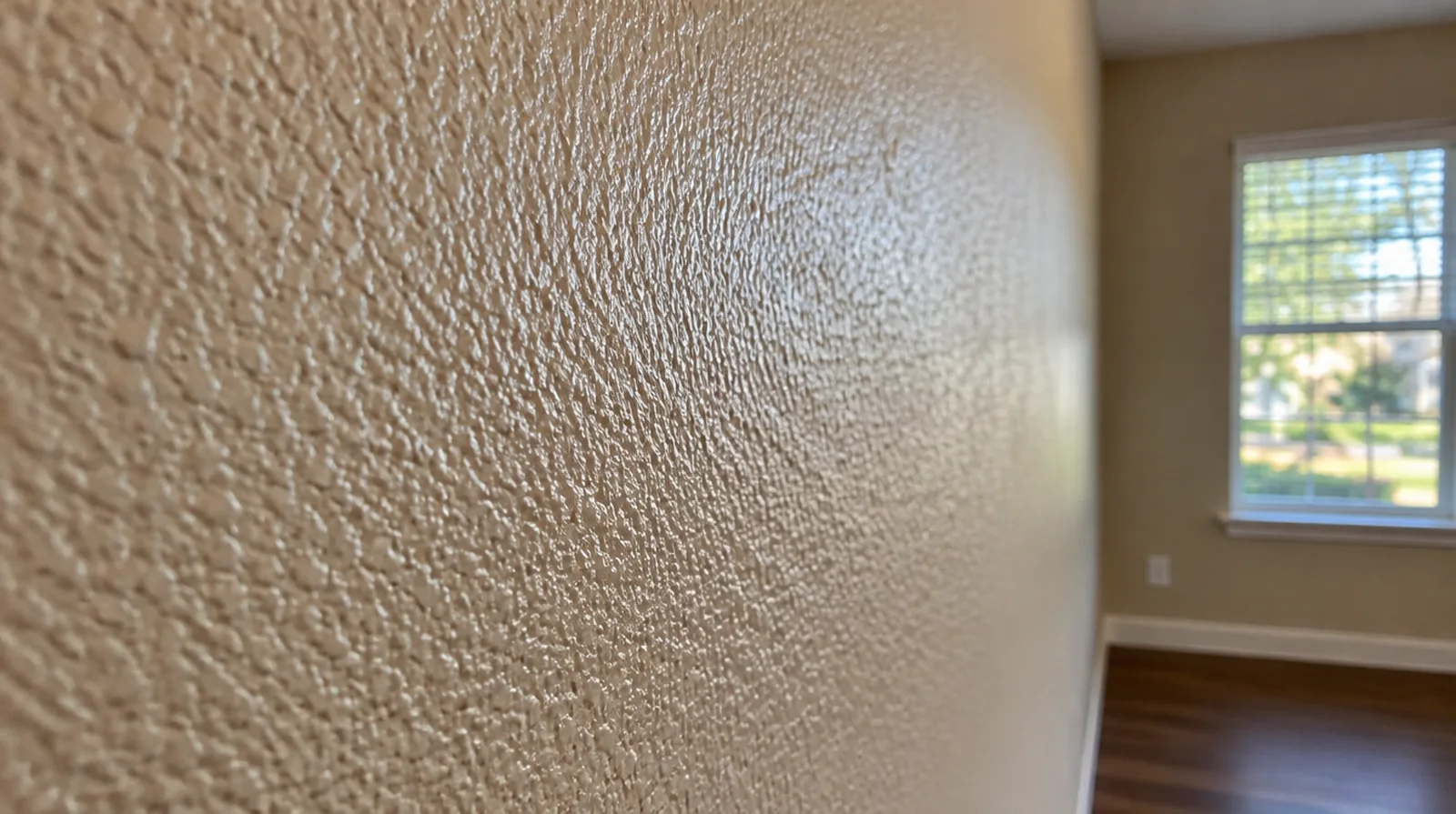
Judge from normal positions
Close inspection of a wet sample is less useful than reviewing the dry finish from ordinary room viewpoints. The planned decorative paint sheen and oblique light both belong in the final appearance discussion. When comparing competing estimates, make sure their protection, surface finish and disposal allowances describe equivalent work before comparing the final prices.
Study the paint layers
Older paint coats may have filled or rounded the original texture profile. A fresh application could need adjustment to resemble the current surface rather than the original texture recipe. At a repair beside an opening, allow clearance for moving board through the doorway and space to use the finishing tools effectively.
Allow time before painting
Applying paint before the texture has dried can disturb the pattern or produce uneven absorption. The quote should explain whether the next decorating stage is included or left to a painter. If the project is part of a larger remodel, settle the sequence with flooring, trim and cabinet work before setting a final finishing date.
Prepare a sample area
A small test helps establish particle size, spacing and the amount of flattening needed. Reviewing the sample before coating the full repair reduces uncertainty about the expected blend. If the finish paint is already chosen, share its sheen and color early because those choices influence how preparation of the surface is judged.
Consider hand applied surfaces
Troweled textures need attention to tool direction, pressure and spacing between repeated shapes. A sample is notably helpful when the current finish was created without a regular sprayed pattern. At a ceiling or wall containing fittings, assign removal and reinstatement duties for the affected devices before repair access is needed.
Protect surrounding finishes
Texture overspray can settle on trim, flooring and nearby fittings if they are not masked. The protection plan should cover the actual application area rather than only the original hole. If the ceiling or wall includes fittings, identify the person responsible for removing and reinstalling each item before the work begins.
Blend beyond the patch
An abrupt rectangular texture boundary often draws attention even when the pattern itself is close. Gradually extending the texture into the surrounding surface may make the blend less abrupt. For walls beside bright windows, review a dry sample from an oblique angle as well as looking straight at the repaired surface.
Set realistic blend expectations
An exact invisible match is not always possible on a weathered or repeatedly painted surface. If local matching remains obvious, discuss whether a wider surface treatment would be preferable. If the room will remain occupied, identify a workable separation between the protected room and the space that still needs daily access.
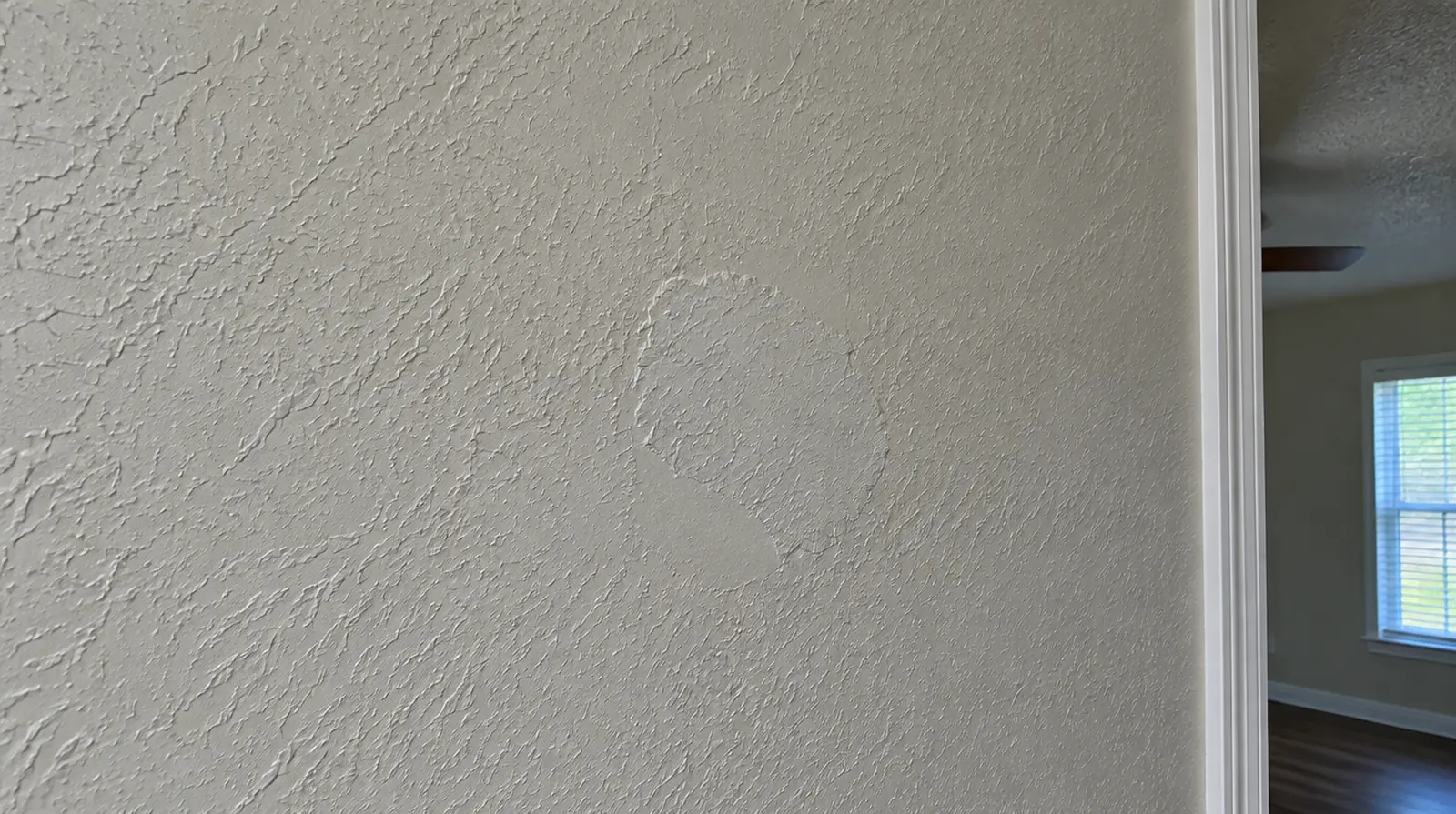
Control application conditions
Compound consistency and application distance affect how a sprayed pattern lands on the wall surface. A knockdown pass also depends on when the applied material reaches the right condition in that room. When damage followed other building work, describe the nearby alterations and the sequence between those changes and the first visible defect.
Check the underlying repair
A decorative pattern will not reliably disguise a ridge or an uneven board joint underneath it. The base repair should be flat and firmly bonded before a decorative pattern is added. For a room with restricted airflow, plan drying conditions alongside dust protection and the comfort of people occupying neighboring spaces.
Project context in Gainesville
Finishing material needs suitable drying conditions, but that does not mean opening the room indiscriminately during humid weather. If a frequently used room must stay partly available, define a sensible separation and move fragile belongings before setup.
Scope questions before finishing
If there is a fixed move in date, reserve adequate time for the coating stages after drywall work instead of counting only the installation period.
For a planned new wall mounted fixture, resolve its backing requirements while the cavity remains open instead of cutting into completed drywall later.
Where a surface has been painted many times, consider whether differences in texture or sheen will require a wider decorative treatment.
At an edge beside built in furniture, state whether the obstruction will be removed or whether finishing stops at the section that can be reached.
When photographs are used for an initial discussion, include a wide room view as well as a close view so scale and surrounding finishes are understandable.
If the proposal requires return visits, identify the purpose of each stage and the intervals during which finishing material needs to remain undisturbed.
While a removed panel exposes the wall surface cavity, complete the necessary review of concealed work before replacement board closes the opening.
At the handover inspection, review the finish from ordinary room positions using the lighting conditions that were agreed for the work.
If the project is part of a larger remodel, settle the sequence with flooring, trim and cabinet work before setting a final finishing date.
When the decorative coating has been selected, tell the finisher its intended sheen and color while the surface preparation standard is still being agreed.
If a separate painter completes decoration, agree the condition of the handed over surface and assign responsibility for small final corrections.
When comparing competing estimates, make sure their protection, surface finish and disposal allowances describe equivalent work before comparing the final prices.
Explore the Gainesville drywall overview for related options, or read the project planning information before arranging the next stage.
More planning details for Gainesville
A Gainesville room improvement can be easier to stage when airflow, protection and household use are discussed together. Ask the finisher how the actual work environment will be managed between coats. Wall mounted items and adjoining trim should be included in the assessment so the final edge is not left ambiguous.